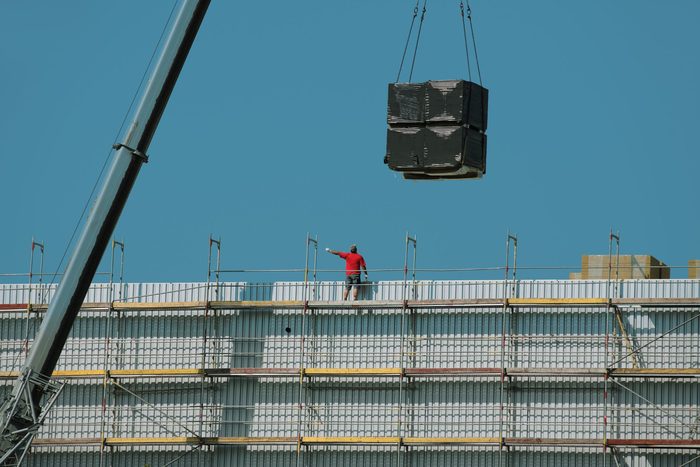
The Crane Signaller course is a short course of 19 academic hours: graduates receive a signaller certificate and are listed in the Safety Administration's registry of service providers. The Building Defects Inspection course takes 414 hours, 100 of them an internship, and graduates receive a certificate from the Ministry of Labor. The first prepares you for signalling work next to the crane, and the second for inspecting buildings and writing professional opinions.
What does a crane signaller do, and why is certification needed?
A signaller is the person who gives the crane operator instructions about lifting the load, positioning it, or directing the crane hook. Under the safety at work regulations and instructions, only a certified signaller may do signalling work, and only a signaller may supervise the work and operation of the different kinds of lifting machines.
What are the admission requirements of the Crane Signaller course, and what do you study?
Admission requirements of the Crane Signaller Course: age 18 or over, a confirmation of 2 weeks of practical experience working alongside a certified crane operator or signaller, and clearance from an occupational physician.
In the course you study laws and regulations, objects and materials lifted in construction, getting to know cranes and loads and operating them safely, lifting accessories and loading tools, rigging and signalling. Practical training is a cornerstone of the course: you gain experience in signalling, lifting loads and rigging, in a controlled environment.
What do you receive at the end of the Crane Signaller course?
Graduates receive a signaller certificate and are listed in the Safety Administration's registry of service providers. The course takes 19 academic hours.
What does a building defects inspector do?
A building defects inspector provides home inspection and building inspection services, for new construction and previously owned apartments, and gives a professional opinion on the soundness and condition of the property. The work does not end with identifying defects: it includes preparing full and detailed home inspection reports and presenting the findings clearly to the client.
What are the admission requirements of the Building Defects Inspection course, and what do you study?
Admission requirements of the Building Defects Inspection course: 12 years of schooling, or knowledge tests in reading comprehension and mathematics at the same level, and at least 2 years of experience in the construction industry.
Topics include the Planning and Building Law, structures, floors, ceilings and walls, plaster, gypsum and paint, water and waterproofing systems, cladding, relevant standards, common failures, reading and writing professional reports and expert opinions, and legal aspects. The course also guides you in writing a legal expert opinion in case of a dispute or a claim.
What do you receive at the end of the Building Defects Inspection course?
Graduates receive a certificate from the Ministry of Labor. The course takes 414 hours: 314 academic hours and a 100-hour internship.
How do you choose between the two courses?
These are two different professions. The Crane Signaller course is short, and fits people who have already worked for 2 weeks alongside a certified crane operator or signaller and want certification for signalling. The Building Defects Inspection course is much longer, requires 2 years of experience in the industry, and prepares you for inspection work and report writing.
For questions about your fit, use the contact page. Interested in managing a site? Read the guide How to become a construction site manager as well.